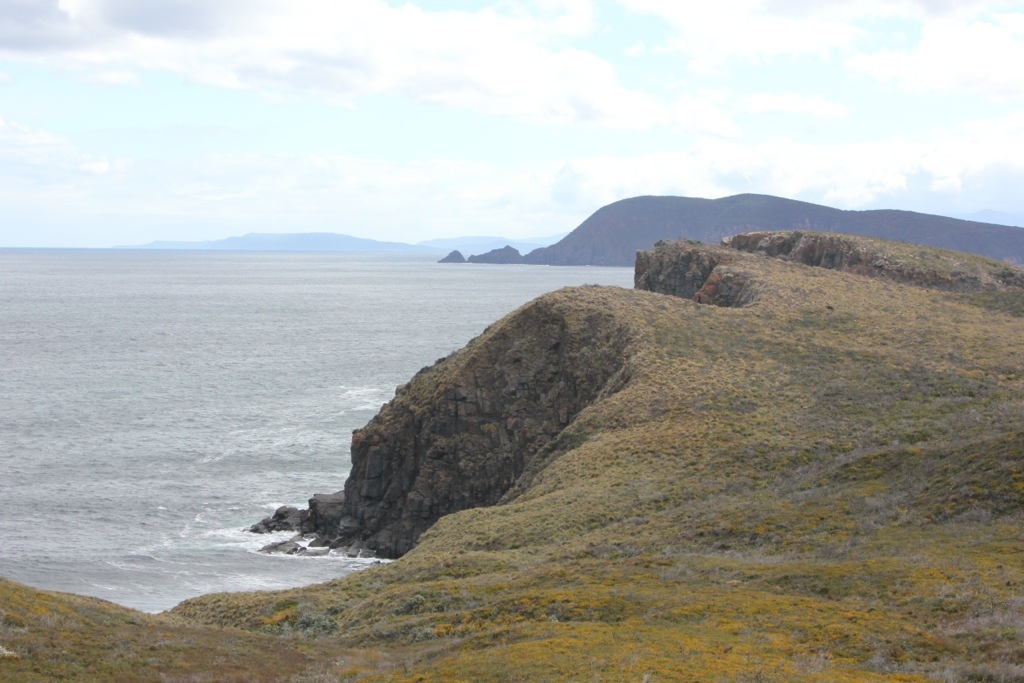
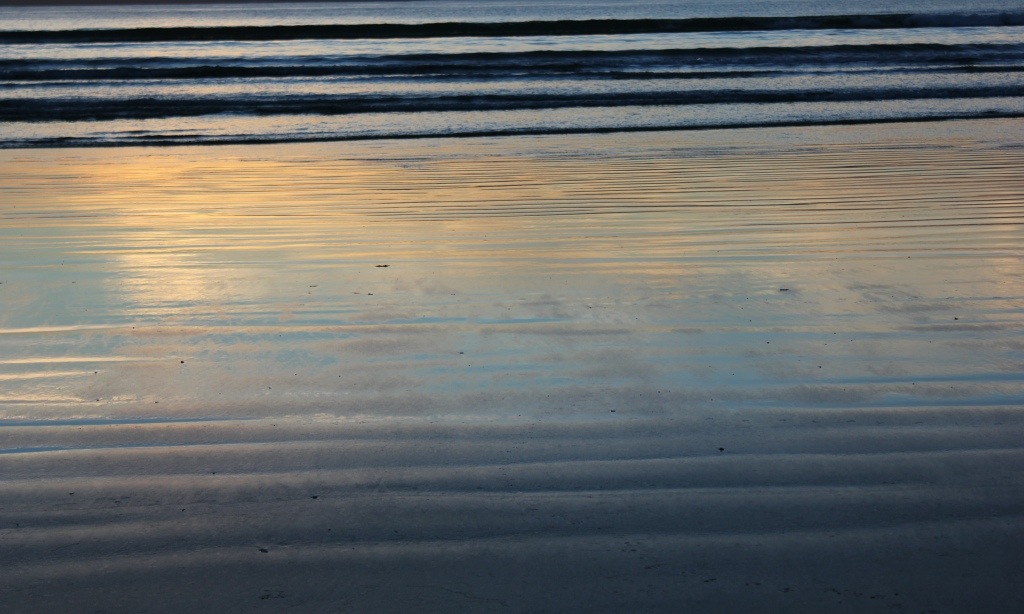
Yesterday’s walk to East Cloudy Head took two and a half hours. At this time of year, there is the smell of honey as you make your way over the Heath, from the yellow flowering gorse, and the many wildflowers.You first walk along the beach, cross a small stream, and then turn inland to climb a series of small hills. Some of them are quite steep, and I took many rests to look back over the islands to the mainland beyond. There was some snow on the Hartz Mountains.
We are off to Tasmania for two weeks, including a few nights staying at the Penitentiary on Maria Island. I will, of course, be taking my camera, and will post some pictures when I can.
I spent today in the studio making transparencies for some large polymer intaglio plates I am planning. I love the way the wash reticulates on the film, and I hope it gives me a rich and complex surface to print.
Toner wash on film ready for transfer to polymer intaglio plates.
I’ve talked about my practice in terms of my interest in surface, and in mark making. Where to from here?
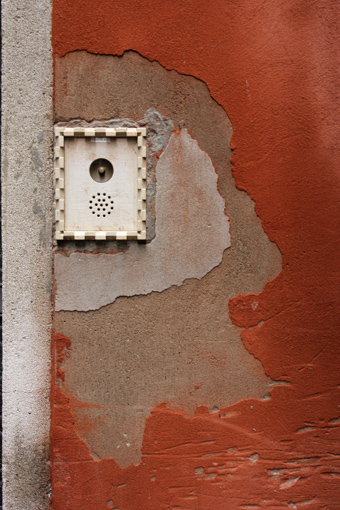
Earlier this year I lived and worked in Venice for a month where I made some large format prints of those crumbling Venetian walls. I have plenty of photographic material for new work about surfaces. I’ll let the images speak for themselves…
Diptych 1 Encaustic, collaged monotypes on tissue.
Usually, prints are presented behind glass, with a matt surrounding the image and a frame enclosing the whole lot. Why struggle to achieve a beautiful surface, then put it behind glass, with its hardness and reflectivity?
I remember discovering encaustic at an exhibition in the Ivan Dougherty Gallery, Sydney, some years ago. There was a beautiful Kim Westcott drypoint embedded in a glowing sensuous red wax. It was large, and unframed. I could see that potentially I could free myself from frame and glass if I explored encaustic. Encaustic is a medium entirely on its own , but it can also be used to collage prints or works on paper together, and to seal them from dust so that they don’t have to be presented behind glass. To work the wax, you can use techniques which are familiar to printmakers. Moreover, the wax can make even quite thick paper translucent, so there is an opportunity to explore the use of light. And, like in printmaking, there are lots of happy accidents. For the last few years, I have been learning as much as I can about encaustic, and have used it together with my printmaking, and alone, as a separate discipline.
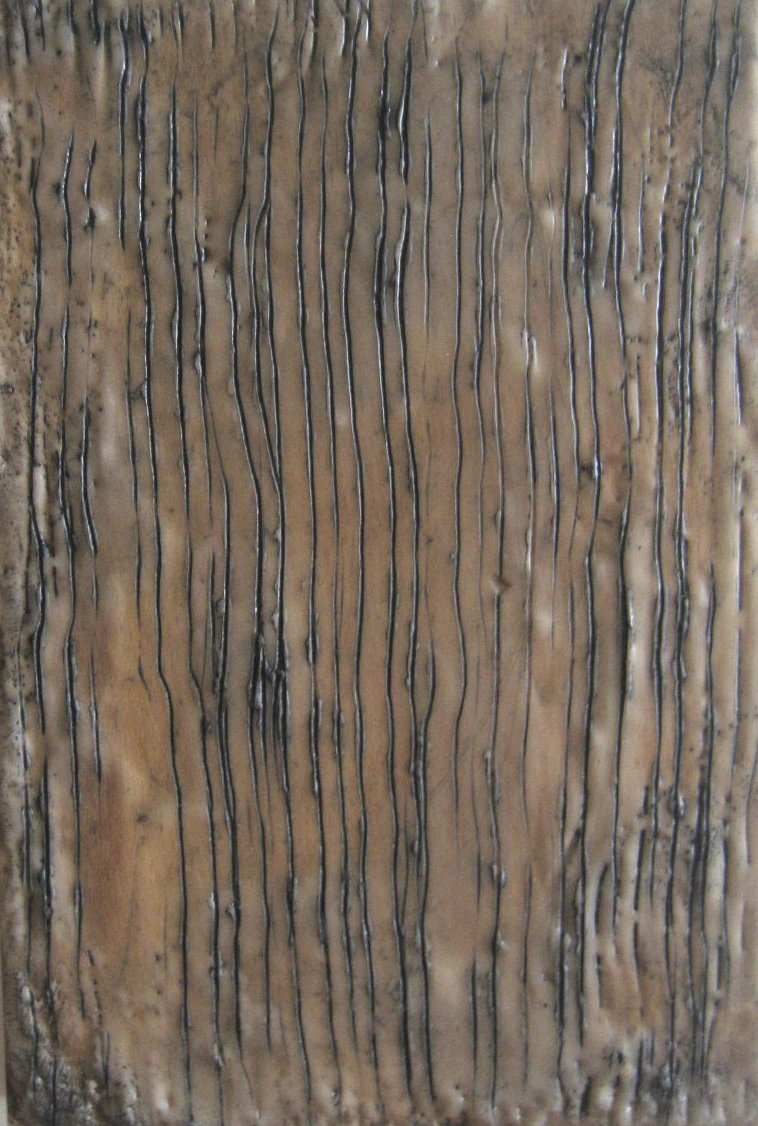
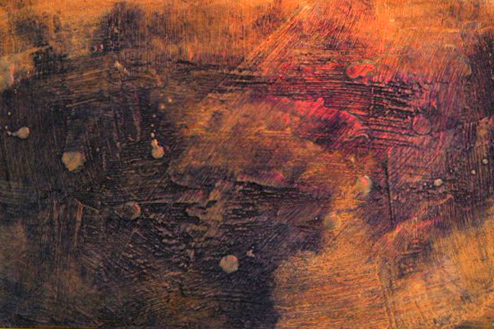
Encaustic, etching ink, on wooden panelUntitled. Encaustic painting, etching ink on wooden panel.
I can see that I have plenty of new directions to take, places to stop on my journey, before I move on again.
The works that I had been doing now seemed too constructed, or fabricated, and I wanted to move to a simpler and more direct technique where the marks could speak for themselves. Having experimented a lot with monotype, and realising what beautiful, sensitive and immediate marks I could make with that technique if I forgot about formal imagery and just went with the flow of surface, I moved on to a series of panels based on the shapes of letters. I noticed that when presented in a manner which stripped them of any meaning, letters could flow thoughtlessly from my hand. Like a madwoman, I turn up the music and draw the letters of the alphabet over and over again. Sometimes I layer several colours onto the image.
Text 2
These are transfer monotypes. In this process, you roll out a colour, carefully place the paper face down on top, and draw through the back. The drawing tool forces the paper into direct contact with the ink, and the drawing is transferred to the paper. As part of the technique, the letters are reversed so they don’t make any sense, and the eye can concentrate on the graphic shapes made by the letters.
There’s just been a hiatus involving root canal therapy, teaching a workshop, and a friend visiting, but I intend to complete these posts related to my practice by hook or by crook!
To continue:
Now I wanted to escape the constraints of the paper. Traditionally, prints are placed on the paper with a border all around. Now I moved to making images comprised of layers of tissue paper joined together in long scroll forms. The light could penetrate them to show more than one level of imagery.
Unframed, they float, and move with the air currents. They appear very delicate, but are actually strong. These works dealt with the colonisation of Australia and the displacement of Aboriginal culture, which had no written language, so I began to introduce text.
Detail, Midden SeriesDetail, Midden series
Here are a couple of details from works in the series, so you can see the texture of the paper. To see the full image, go to the printmaking page of the blog.
*A Midden is an old dump for domestic waste, or occupation site which reveals a great deal about the way people lived.








 BOX OF BIRDS