
This is printed on10 tiles, each 100 x100mm. the tiles can be arranged any way you want, as above, or like this.

The tiles are coated with encaustic medium.
"One of the advantages of being disorderly is that one is constantly making exciting discoveries." A.A.Milne
This is printed on10 tiles, each 100 x100mm. the tiles can be arranged any way you want, as above, or like this.
The tiles are coated with encaustic medium.
Here are details of the first prints from the plates I made a few weeks ago from hand drawn toner washes on transparent film. I usually print them first in black, then decide how I am going to develop them to make the most of the imagery. In this case, I printed in Charbonnel Paynes Gray water wash ink.
There are six in all, and another two to come.


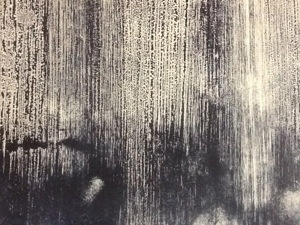


I spent today in the studio making transparencies for some large polymer intaglio plates I am planning. I love the way the wash reticulates on the film, and I hope it gives me a rich and complex surface to print.

So, almost a month without posting…..
I’ve talked about my practice in terms of my interest in surface, and in mark making. Where to from here?
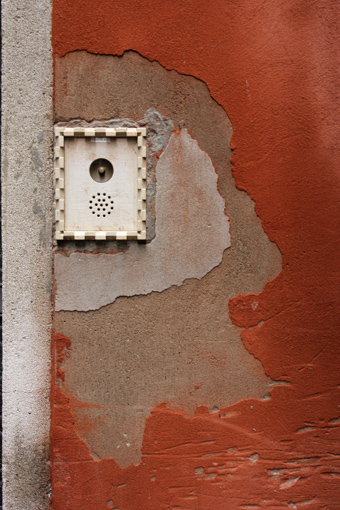
Earlier this year I lived and worked in Venice for a month where I made some large format prints of those crumbling Venetian walls. I have plenty of photographic material for new work about surfaces. I’ll let the images speak for themselves…



I’m also an explorer. When I make work, I hope for something outside of me to contribute something. It might sound a bit crazy, but it’s as if I’m only part of the process. I’m on a journey which hasn’t got a destination, so commonly, pieces of my work or series in my work are stops along the way.
Over time, I’ve learnt to trust my hand, so that I no longer throw things out, and I no longer regard things as ‘failed’. They will sit around the studio for months sometimes, until I can find the right place for them. I find time in the studio when I can get out of my head is the most productive. I play music or listen to the radio to facilitate the process of turning off my brain to let it happen.


It was very liberating. I felt no longer tied to the information on the plate. I found I could make a series of different prints from one plate by altering the way I inked up and overlays of transparent paper on the base print. Now, I could print many different images from the same plates. I started to develop a library of plates, which I used in different prints by inking them in different colours and combining them with other plates in different ways. I stopped routinely making editions.


 BOX OF BIRDS